

The Toy Post Social Media Campaign Strategy
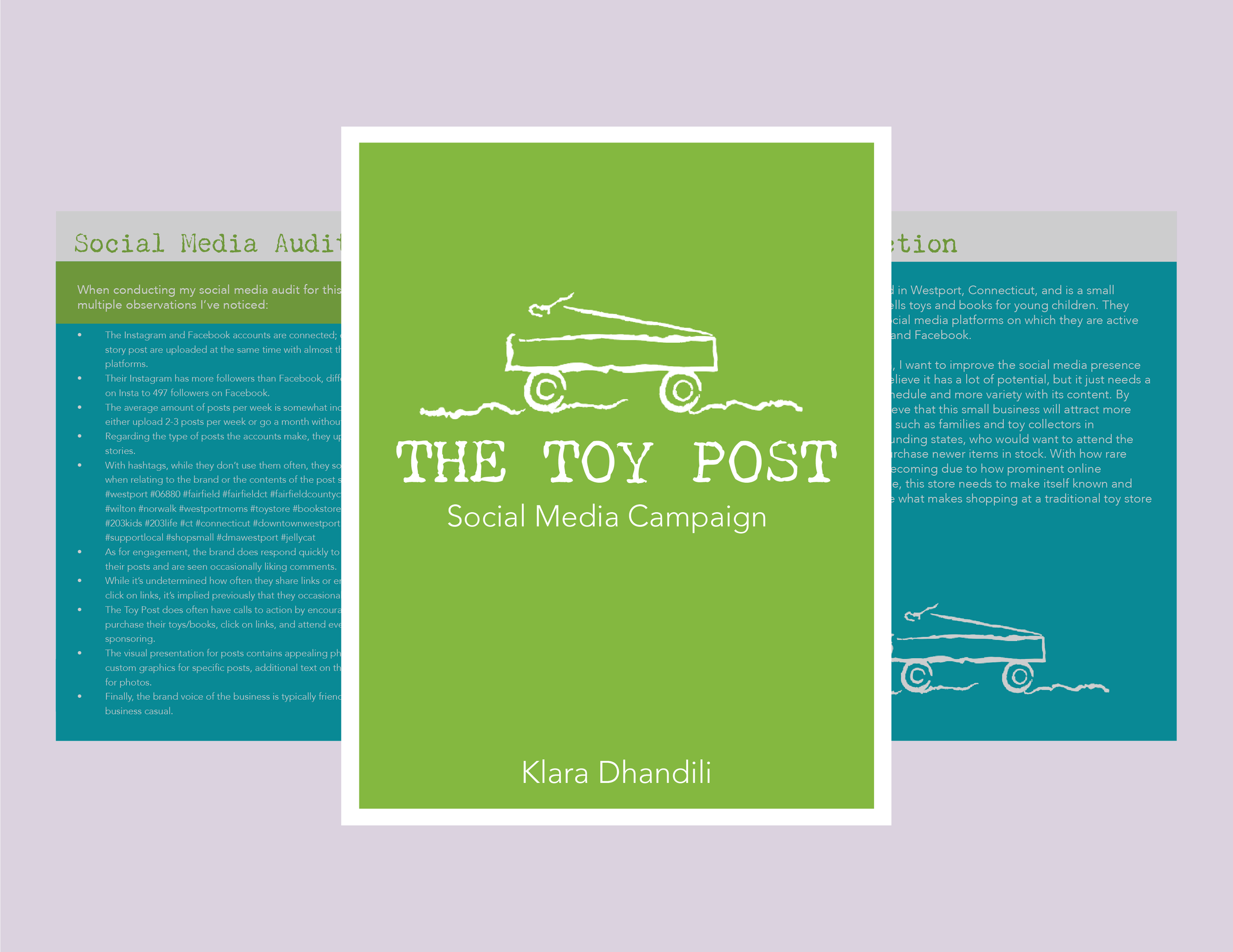
The Toy Post is a small business toy store located in Westport, Connecticut, that sells plushies, dolls, books, and other items catered to children.
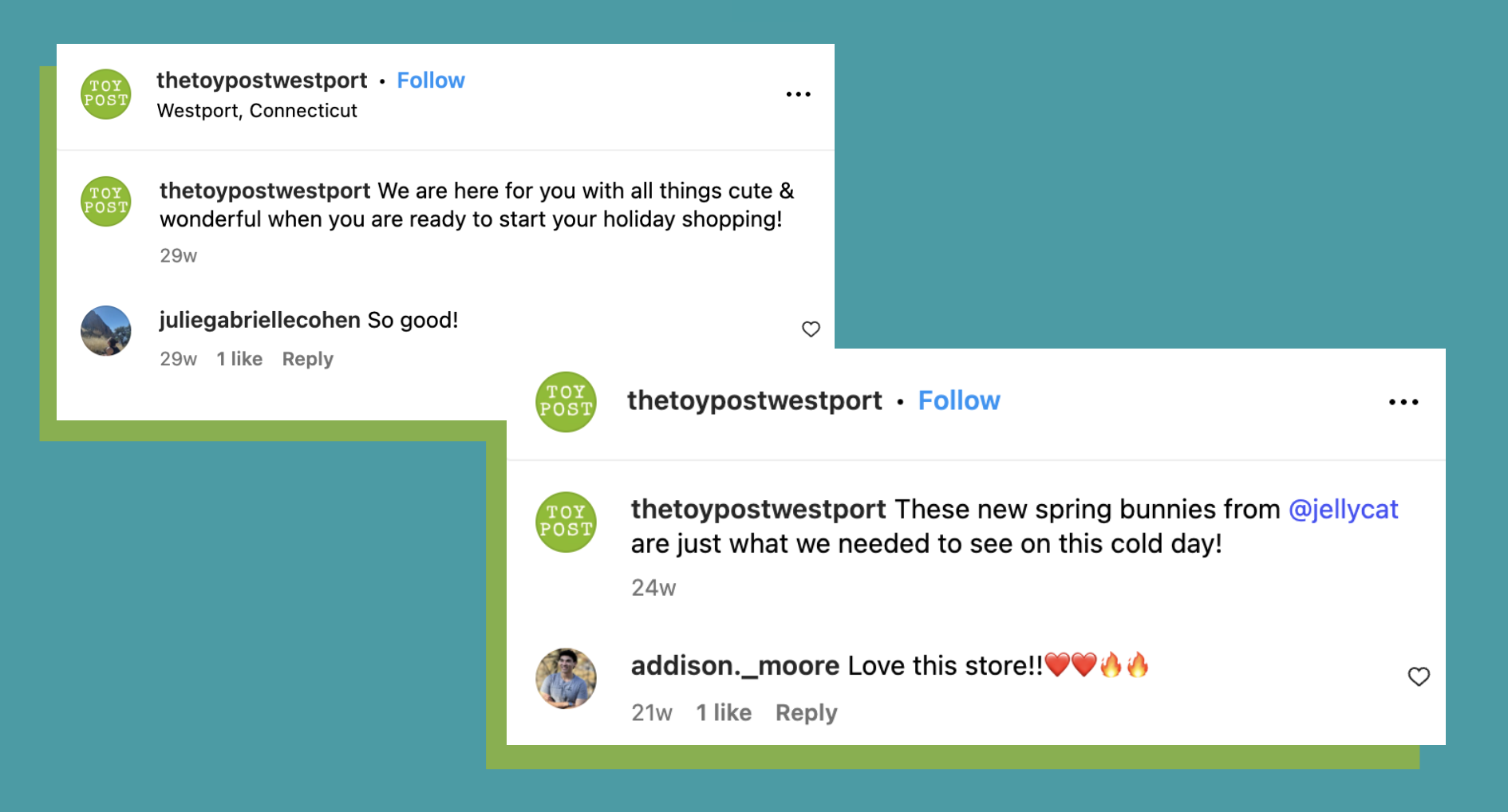
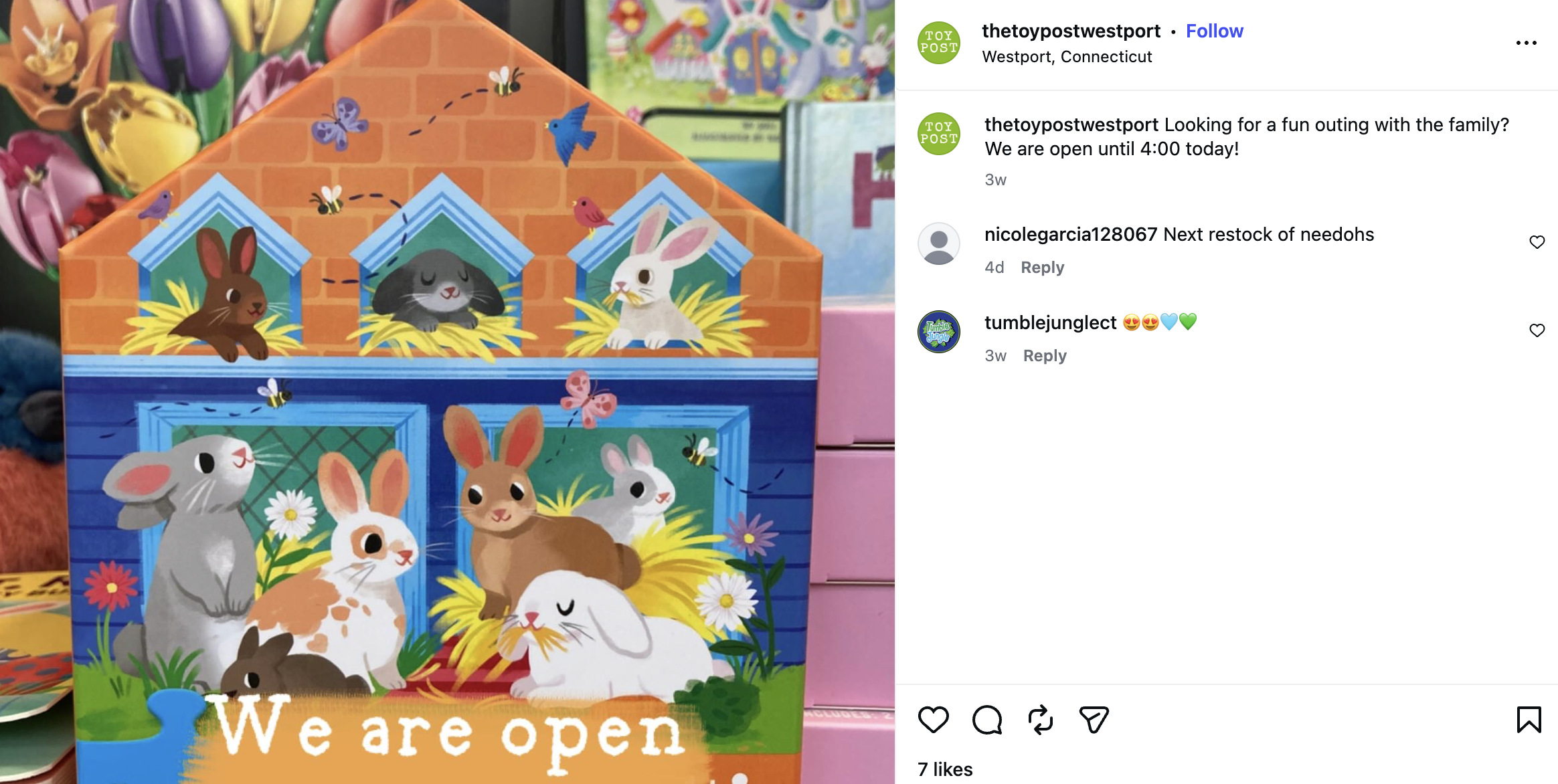
Their social media sites are somewhat active, but their upload schedules are irregular, and their posts are quite standard when it comes to promoting products and events.
Using their social media as a base, I organized a hypothetical campaign for the brand by conducting social media audits, competitive analysis, target audience analysis, campaign strategies, platform settings, and content calendar.
The Challenge
For this campaign concept developed for The Toy Post, I evaluated the brand’s existing social media presence across Instagram and Facebook to identify opportunities for improvement.
The audit revealed inconsistent posting patterns, with periods of frequent activity followed by gaps in content. While existing posts effectively showcased products, they lacked visual distinction and were easily overlooked in fast-moving social feeds. Engagement levels were relatively low, with minimal audience interaction, limited responses to comments, and an absence of clear calls to action.
The Process
To address these challenges, I developed a structured, month-long campaign focused on improving content consistency, increasing engagement, and strengthening brand awareness.
I began with audience and competitor research, analyzing how similar local toy retailers position themselves online. Based on these insights, I identified the primary target audience as adults aged 30 and older with young children. This informed a strategic shift in messaging—prioritizing content that resonates with parents rather than solely appealing to children.
The campaign theme, “Reliving a Nostalgic Experience,” was designed to connect emotionally with this audience by highlighting traditional, screen-free play experiences. This concept positioned The Toy Post as a place where families can rediscover classic forms of play and connection.
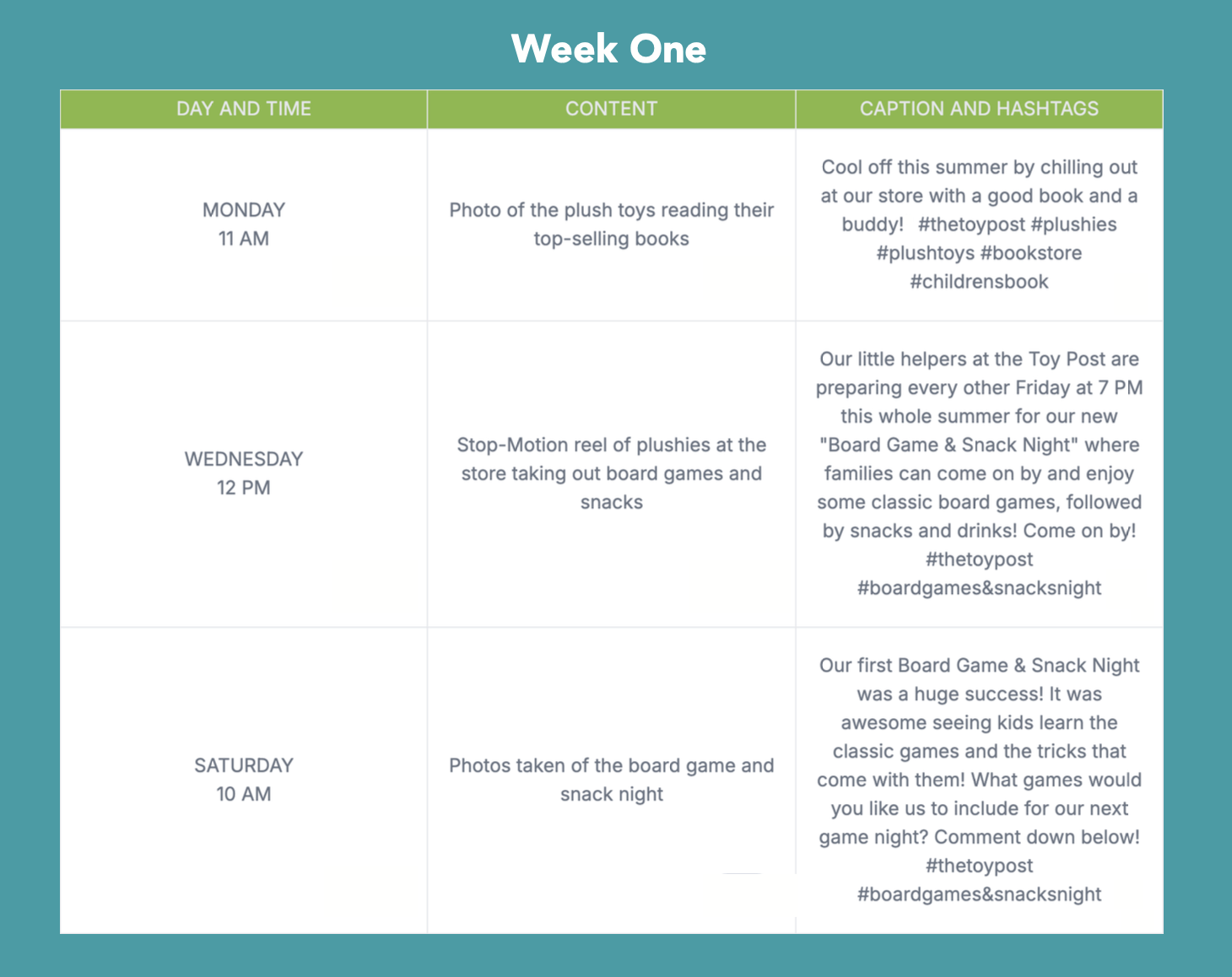
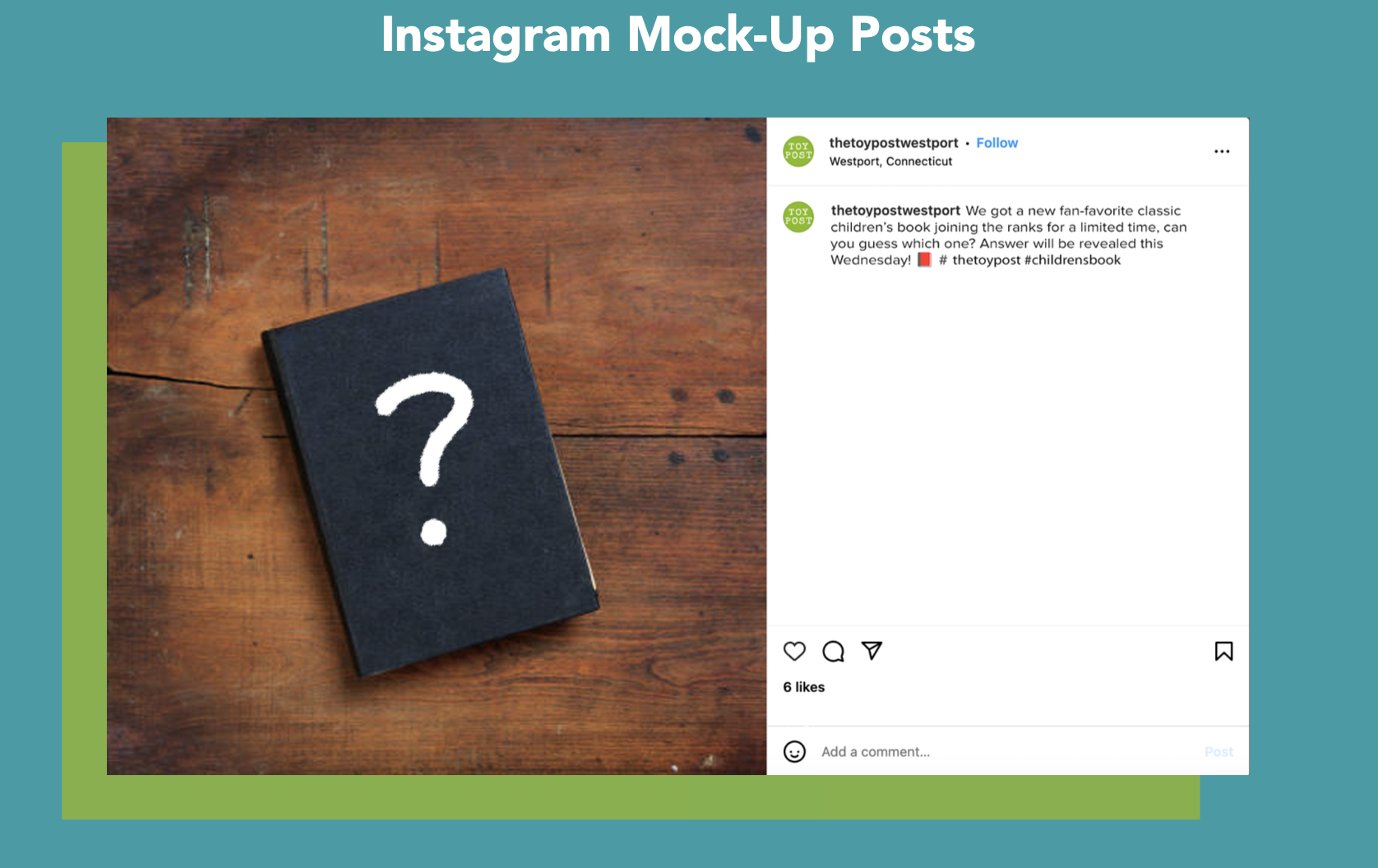
I created a detailed content calendar featuring 2–3 posts per week, incorporating a mix of photo and video content to maintain variety and visual interest. Each post was designed with a clear call to action to encourage interaction and drive engagement.
To maximize reach, all posts were supported by story shares and tailored hashtag strategies, including campaign-specific tags to encourage user-generated content. Additionally, I identified opportunities for growth through paid promotions and partnerships with local influencers, aligning with the brand’s scale and target demographic.
Campaign success would be evaluated through key performance indicators, including growth in followers, likes, shares, and comments, as well as increases in website traffic and search visibility. Comparing pre- and post-campaign metrics would provide insight into overall effectiveness and areas for further optimization.
The Outcome & Takeaways
All campaign research, strategy, and creative direction were compiled into a cohesive, multi-page PDF presentation designed for clarity and ease of review.
This project strengthened my ability to translate research into actionable strategy, develop cohesive campaign concepts, and design structured content calendars. It also deepened my understanding of how thoughtful storytelling and consistency can elevate a brand’s social media presence.